

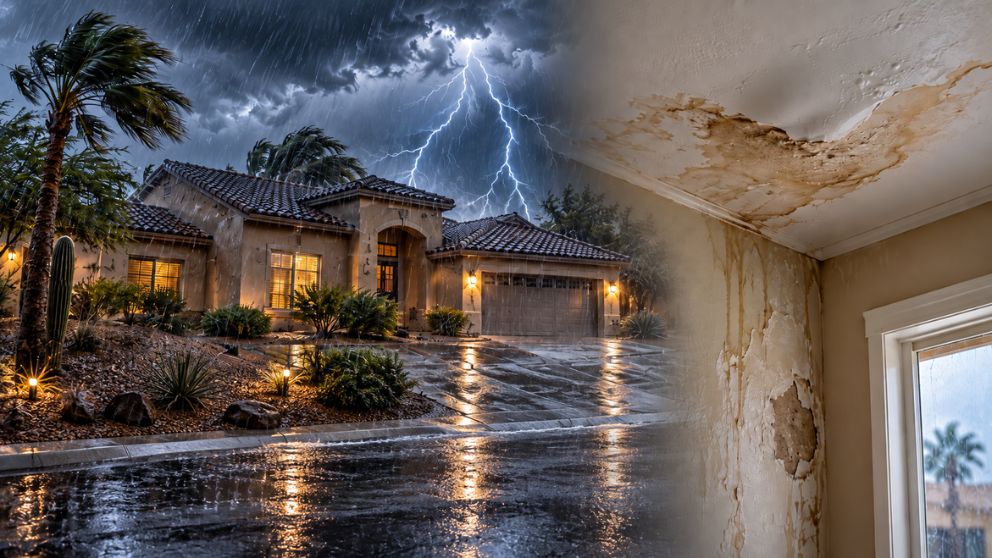
Arizona homeowners are used to intense summer heat, but monsoon season brings a completely different challenge. Heavy rain, strong winds, blowing dust, roof leaks, and sudden water intrusion can expose problems that may have gone unnoticed during the dry months.
Arizona's official monsoon season runs from June 15 through September 30, bringing an increased chance of thunderstorms and heavy rainfall across the state.
While your roof, stucco, windows, and exterior walls provide the first line of protection, drywall is often where hidden water damage eventually becomes visible.
A small stain on the ceiling or a slightly soft area on a wall may look minor at first. However, it can be a sign that rainwater has already entered your home.
How Monsoon Water Reaches Your Drywall
Drywall is located inside your home, so it may seem protected from outdoor weather. Unfortunately, rainwater can travel through several parts of a building before finally appearing on an interior wall or ceiling.
Roof Leaks
Roof damage is one of the most common ways water reaches ceiling drywall.
Strong monsoon winds can expose existing roof problems, while heavy rainfall can enter through damaged roofing materials, flashing, roof penetrations, or areas that are no longer properly sealed.
Once water gets into the roof system, it can travel along framing or insulation before reaching the drywall below.
This is why the location of a ceiling stain doesn't always tell you exactly where the roof leak started.
Wind-Driven Rain Around Windows and Doors
Monsoon rain doesn't always fall straight down.
Strong winds can push water against windows, doors, exterior trim, and wall openings. If seals, caulking, flashing, or surrounding materials have deteriorated, moisture may find its way behind the wall.
Eventually, homeowners may notice bubbling paint, discoloration, damaged drywall corners, or soft areas around a window or door.
Cracks or Damage in Exterior Stucco
Stucco protects many Arizona homes from the elements, but cracks or damaged areas can allow water to penetrate the exterior wall system.
A crack that causes few noticeable problems during Arizona's dry months may become much more important once monsoon rain begins hitting the wall.
Water that gets behind the exterior surface may eventually affect insulation, framing, and interior drywall.
Repairing the drywall alone won't solve the problem if the original exterior leak remains.
Water Entering Through Attics
Roof leaks aren't the only attic-related problem.
Wind-driven rain may enter around roof vents, flashing, HVAC penetrations, or other openings. Moisture can then soak insulation above your ceiling.
Wet insulation may hold moisture against drywall for an extended period, causing staining, sagging, or deterioration.
What Does Monsoon-Damaged Drywall Look Like?
Water damage isn't always dramatic. You may not see water running down a wall.
Instead, watch for changes such as:
- Yellow or brown stains on ceilings or walls
- Bubbling, peeling, or blistering paint
- Soft or spongy drywall
- Swollen drywall seams
- Sagging ceiling areas
- Crumbling drywall
- Loose or bubbling drywall tape
- New cracks after a storm
- Musty odors near walls or ceilings
- Dark spots or visible mold growth
Even a relatively small stain deserves attention, especially if it appears immediately after heavy rain.
Why Wet Drywall Shouldn't Be Ignored
Drywall contains gypsum covered with paper facing. Once it becomes saturated, it can lose strength and may not return to its original condition after simply drying.
More importantly, moisture trapped inside a wall or ceiling can create conditions where mold can develop.
The U.S. Environmental Protection Agency recommends drying water-damaged materials and areas within approximately 24 to 48 hours to help prevent mold growth.
Simply painting over a stain doesn't address the underlying moisture problem.
The source of the water should be identified first.
Can Wet Drywall Be Repaired?
Sometimes.
The correct solution depends on how much water entered the area, how long the drywall remained wet, and whether the material has lost its structural integrity.
A small area affected by limited moisture may sometimes be dried and repaired once the water source has been corrected.
However, drywall that has become heavily saturated, sagged, softened, deteriorated, or developed mold may need to be removed and replaced.
The damaged section can then be finished, textured, and prepared to blend with the surrounding wall or ceiling.
Don't Repair the Drywall Before Fixing the Leak
One of the biggest mistakes homeowners can make is repairing the visible drywall damage before addressing where the water came from.
Imagine replacing a section of ceiling drywall while the roof above it still leaks.
The next monsoon storm can damage the brand-new repair.
The same applies to leaking windows, stucco cracks, plumbing problems, or exterior wall penetrations.
The correct order is usually:
Find the moisture source → stop the water intrusion → allow the area to dry → evaluate the damage → repair or replace the drywall → match the texture and finish.
This approach helps prevent the same problem from returning.
Why Ceiling Water Damage Requires Extra Attention
Water-damaged ceiling drywall should be taken seriously.
When drywall absorbs enough moisture, it becomes heavier and weaker. A ceiling section that appears swollen or severely sagging may not remain securely attached.
Avoid standing directly underneath a badly sagging ceiling.
The area should be inspected so the cause of the moisture and the condition of the drywall can be determined before repairs begin.
Matching the Existing Drywall Texture
Repairing storm-damaged drywall isn't finished when the hole is patched.
Many Arizona homes use textured walls and ceilings, including orange peel and knockdown finishes.
A repair can remain very noticeable if the new texture doesn't blend with the surrounding surface.
Professional drywall repair typically involves preparing the damaged section, installing replacement drywall where necessary, taping and finishing seams, applying texture, sanding or refining the surface, and preparing the repaired area for painting.
The goal is to make the repaired area blend as naturally as possible with the existing wall or ceiling.
Check Your Home After Major Monsoon Storms
You don't need visible flooding to have water damage.
After a strong monsoon storm, take a few minutes to inspect areas where leaks commonly appear.
Look around ceilings, skylights, exterior walls, windows, doors, HVAC openings, bathrooms, garages, and areas below roof penetrations.
Also check rooms you don't use every day.
Finding a small moisture problem early can often prevent a much larger drywall repair later.
What If You Find a Water Stain?
Start by identifying whether the moisture source is still active.
If the area is wet, avoid covering it with paint or attempting a cosmetic patch.
A stain can sometimes be the final visible sign of water that has traveled through several layers of your home.
If necessary, have the roof, window, stucco, plumbing, or other potential source inspected before completing the interior repair.
Once the source has been corrected and the area is properly dry, the drywall damage can be evaluated and repaired.
Professional Drywall Repair After Arizona Monsoon Damage
Monsoon damage can range from a small ceiling patch to larger sections of damaged drywall that need to be removed and replaced.
At Professional Home Repair, we help Arizona homeowners restore damaged walls and ceilings with professional drywall repair and patching services.
Whether you're dealing with a ceiling stain, damaged drywall around a window, a section opened during leak repairs, or drywall that needs replacement after water intrusion, we can help restore the affected area and create a clean, finished appearance.
Need Drywall Repair After a Monsoon Storm?
Don't wait for a small damaged area to become a larger repair.
If your walls or ceilings show signs of water damage after an Arizona monsoon storm, contact Professional Home Repair to schedule an inspection or request a quote.
We'll assess the drywall damage, determine what needs to be repaired or replaced, and help restore your wall or ceiling properly.