

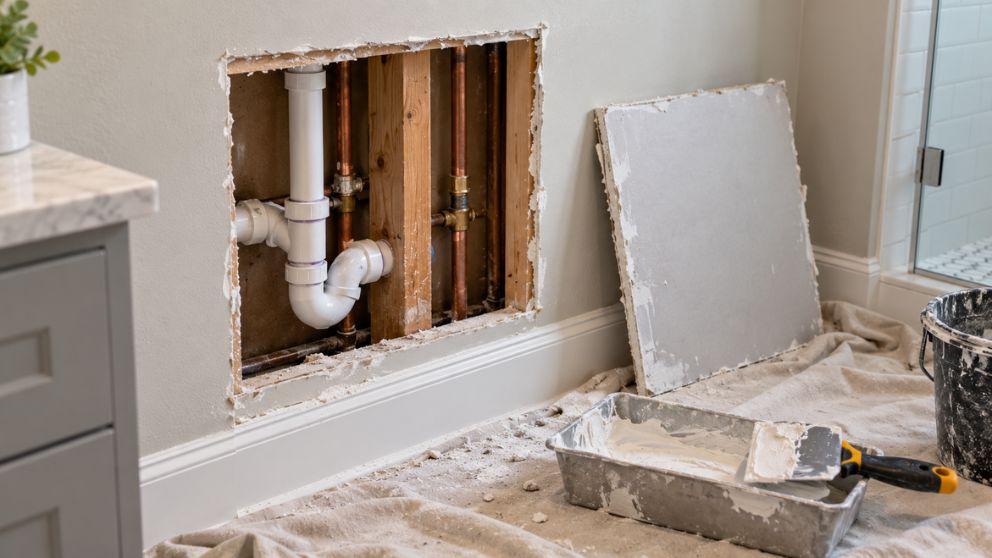
Plumbing repairs often solve the immediate problem, but they can leave behind another issue: damaged drywall.
When a plumber needs access to pipes inside a wall or ceiling, they may have to cut an opening in the drywall. In other cases, a leak may damage the drywall before the plumbing problem is even discovered.
Once the plumbing repair is complete, homeowners are often left asking the same question:
What happens to the drywall now?
The good news is that most drywall damage caused by plumbing access or water leaks can be repaired professionally and blended back into the surrounding wall or ceiling.
Why Plumbers Cut Into Drywall
Many plumbing components are hidden behind walls, ceilings, and cabinets.
If a plumber needs to repair or replace a pipe, valve, drain line, or fitting, they may need direct access to the area.
This can involve cutting into drywall around:
- Water supply lines
- Drain pipes
- Shower plumbing
- Bathtub plumbing
- Bathroom walls
- Kitchen walls
- Laundry areas
- Water heater connections
- Ceiling plumbing
- Pipes between floors
The plumber's main job is to stop the leak or repair the plumbing system.
Restoring the drywall is usually the next step.
Plumbing Repair and Drywall Repair Are Two Different Jobs
Homeowners are sometimes surprised to find that the plumber does not automatically repair the wall after completing the plumbing work.
In many cases, plumbers are responsible for opening the wall and repairing the plumbing, while a drywall professional or handyman restores the damaged surface afterward.
That may include:
- Closing the access opening
- Installing replacement drywall
- Taping the seams
- Applying joint compound
- Sanding the area smooth
- Matching the existing texture
- Preparing the wall for painting
The goal is to make the repaired section look like part of the original wall again.
First, Make Sure the Plumbing Problem Is Completely Fixed
Before repairing the drywall, it is important to confirm that the plumbing issue has been resolved.
Closing the wall too early can create problems if the pipe begins leaking again.
The repaired plumbing should be checked for leaks before drywall installation begins.
In some situations, the area may also need time to dry before the wall can be closed.
What If the Drywall Was Damaged by a Leak?
Not all drywall damage comes from the plumber cutting an access hole.
A leaking pipe may soak the drywall before the plumbing problem is discovered.
Signs of water-damaged drywall can include:
- Brown or yellow stains
- Soft areas
- Swelling
- Bubbling paint
- Loose drywall tape
- Crumbling material
- Sagging ceilings
- Musty odors
- Dark spots or visible mold
If the drywall has become severely damaged, simply closing the plumbing access opening may not be enough.
The affected drywall may need to be removed and replaced.
Does Wet Drywall Always Need to Be Replaced?
Not necessarily.
The answer depends on how wet the drywall became and how long it remained exposed to moisture.
Drywall may sometimes be repairable if:
- The leak was caught quickly
- The drywall remained firm
- There is no sagging
- There is no significant swelling
- The area dried completely
- There are no signs of mold
Replacement may be necessary if the drywall is:
- Soft
- Spongy
- Sagging
- Crumbling
- Severely swollen
- Structurally weakened
- Heavily stained
- Affected by mold
The damaged area should be evaluated before the wall is closed.
What Happens During Drywall Repair After Plumbing Work?
The exact process depends on the size and location of the opening.
Step 1: Inspect the Opening
The repair area is checked to determine whether the surrounding drywall is still in good condition.
Any loose, wet, or damaged material may need to be removed.
Step 2: Prepare the Opening
The edges of the drywall may be trimmed so the replacement piece can fit properly.
Support may also be added behind the opening if needed.
Step 3: Install New Drywall
A new section of drywall is cut to fit the opening and secured in place.
The thickness of the replacement drywall should match the existing wall or ceiling.
Step 4: Tape and Finish the Seams
Drywall tape and joint compound are applied around the edges of the patch.
Several coats may be required to create a smooth transition between the new drywall and the existing surface.
Step 5: Sand the Repair
Once the compound has dried, the repair is sanded and refined.
This step helps prevent the patch from looking raised or uneven.
Step 6: Match the Existing Texture
Many Arizona homes have textured walls and ceilings.
Common finishes include:
- Orange peel
- Knockdown
- Smooth finish
- Skip trowel
- Textured ceilings
Matching the texture is one of the most important parts of making a drywall repair blend naturally.
Step 7: Prepare for Paint
Once the drywall repair is complete, the area can be primed and painted.
Depending on the age and condition of the existing paint, a larger section of the wall may sometimes need painting to create a consistent finish.
How Long Does Drywall Repair Take After Plumbing Work?
Small access holes can often be repaired relatively quickly, but drywall finishing usually involves drying time between coats of joint compound.
Larger repairs, ceiling damage, texture matching, or water-damaged areas may require additional steps.
The important thing is not to rush the process.
Proper drying and finishing help create a smoother and more durable result.
Can the Piece of Drywall the Plumber Removed Be Reused?
Sometimes, but not always.
If the removed piece is clean, dry, and undamaged, it may be possible to reuse it.
However, if the drywall was broken during removal, became wet, or no longer fits properly, installing a new piece is often the better option.
The goal should be a strong repair rather than simply putting the original piece back into place.
What About Drywall Openings Under Sinks or Behind Cabinets?
Not every plumbing access opening is highly visible.
Some openings may be located inside cabinets, behind appliances, or under sinks.
Even in less visible locations, the opening should still be properly closed when appropriate.
Open drywall can allow dust, pests, and air movement between wall cavities and the living space.
A clean repair also leaves the area looking more finished.
Ceiling Repairs After Plumbing Leaks
Plumbing leaks from an upstairs bathroom, water line, drain pipe, or HVAC system can damage the ceiling below.
Ceiling repairs require additional attention because water can weaken the drywall.
If the ceiling is sagging or bulging, avoid standing directly underneath the affected area until it has been inspected.
Once the plumbing problem has been repaired and the area is dry, damaged ceiling drywall can be removed, replaced, finished, and textured.
Should You Repair the Drywall Yourself?
Small patches may look simple, but creating a repair that disappears into the surrounding wall can take skill.
Common DIY problems include:
- Visible seams
- Raised patches
- Uneven joint compound
- Poor sanding
- Mismatched texture
- Cracks around the repaired area
For larger plumbing access holes or highly visible walls and ceilings, professional drywall repair can provide a cleaner finished result.
Don't Close the Wall Before the Area Is Ready
One of the biggest mistakes after plumbing work is closing the drywall before everything behind it has been checked.
Before repairing the wall, make sure:
- The leak is fully repaired
- The plumbing has been tested
- The area behind the wall is dry
- Damaged insulation has been addressed
- Any wet or deteriorated drywall has been removed
Once these steps are complete, the drywall repair can begin.
Professional Drywall Repair After Plumbing Work
A plumbing repair should not leave your home looking unfinished.
At Professional Home Repair, we help Arizona homeowners restore walls and ceilings after plumbing work.
Whether a plumber cut a small access opening or a leak caused larger drywall damage, we can repair the affected area and help create a clean, finished appearance.
Our drywall repair services can include:
- Drywall patching
- Drywall replacement
- Ceiling repair
- Texture matching
- Joint finishing
- Repair of plumbing access holes
- Water-damaged drywall repair
Need Drywall Repaired After a Plumbing Job?
If the plumbing is fixed but your wall or ceiling is still open, the next step is restoring the drywall.
Contact Professional Home Repair for professional drywall repair in Arizona.
We can evaluate the damaged area, replace or patch the drywall as needed, and help restore the wall or ceiling so the plumbing repair does not leave a permanent reminder behind.