

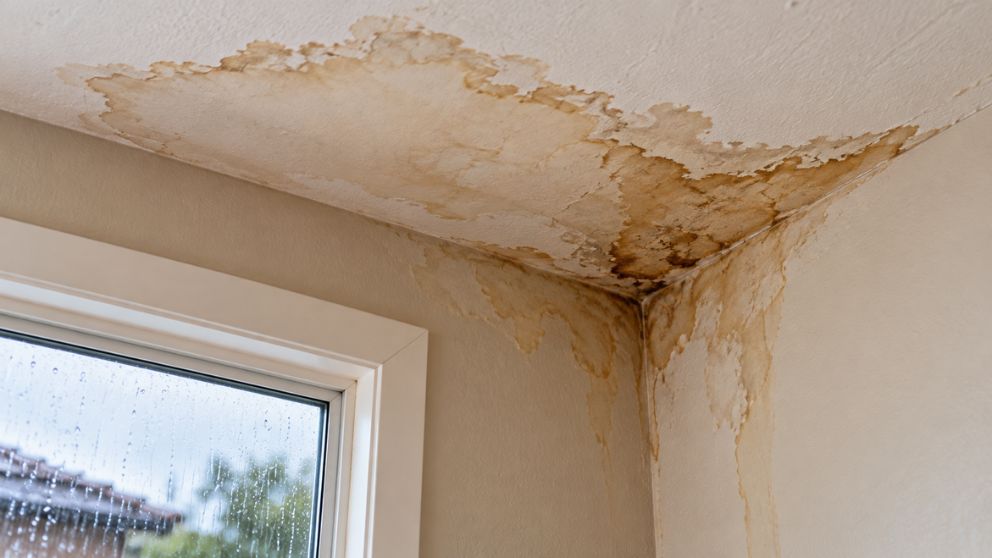
A brown or yellow stain on your drywall may look like a cosmetic problem, but it often means moisture has entered the wall or ceiling.
In some cases, the drywall can be dried, repaired, and repainted. In others, the damaged section should be removed and replaced.
The right solution depends on where the water came from, how long the drywall stayed wet, and how much damage occurred beneath the surface.
Before covering the stain with paint, it is important to understand what caused it.
What Causes Water Stains on Drywall?
Water stains usually appear when moisture reaches the back or surface of drywall.
Common causes include:
- Roof leaks
- Plumbing leaks
- Leaking pipes inside walls
- Water around windows or doors
- HVAC condensation
- Bathroom moisture
- Overflowing sinks, tubs, or toilets
- Water intrusion after storms
- Damaged exterior stucco or flashing
Sometimes the source of the leak is directly above the stain.
Other times, water travels along framing, pipes, or insulation before reaching the drywall, so the visible stain may appear several feet away from the actual leak.
What Does Water-Damaged Drywall Look Like?
Not all water damage looks the same.
Homeowners may notice:
- Yellow or brown stains
- Dark rings on ceilings
- Peeling or bubbling paint
- Soft drywall
- Swollen areas
- Sagging ceiling drywall
- Crumbling material
- Bubbling drywall tape
- Warped surfaces
- Musty odors
- Mold or dark spotting
The condition of the drywall matters more than the size of the stain.
A small stain can sometimes hide a larger moisture problem behind the wall.
Can You Just Paint Over a Water Stain?
Usually, no.
Painting over the stain may improve the appearance temporarily, but it does not fix the source of the moisture.
If the leak is still active, the stain can return and the drywall may continue to deteriorate.
Before painting, the correct order is generally:
Find the leak → repair the source → allow the area to dry → inspect the drywall → repair or replace damaged material → prime and repaint.
Skipping the first steps can lead to repeated repairs.
When Can Water-Damaged Drywall Be Repaired?
Drywall may be repairable when the moisture exposure was limited and the material is still firm.
For example, repair may be possible if:
- The leak was discovered quickly
- The drywall did not become saturated
- The surface is still solid
- There is no sagging
- There is no visible mold
- The drywall has fully dried
- The moisture source has already been corrected
In these cases, the damaged finish may be repaired, sealed with an appropriate stain-blocking primer, textured if necessary, and repainted.
However, the drywall should be inspected before assuming it is still in good condition.
When Should Drywall Be Replaced?
Replacement is usually the better option when the drywall has lost strength or remained wet for an extended period.
You may need to replace the damaged section if the drywall is:
Soft or Spongy
Drywall should feel firm.
If pressing lightly on the surface causes it to feel soft, weak, or spongy, the gypsum inside may have deteriorated.
Sagging
Sagging is especially important on ceilings.
Wet drywall becomes heavier and weaker. A badly sagging ceiling section may need to be removed and replaced rather than patched.
Crumbling
Drywall that breaks apart easily or has lost its shape usually cannot be restored with surface repairs alone.
Severely Swollen
Water can cause drywall paper and gypsum to swell.
Once the board has significantly changed shape, replacing the affected section often produces a better result.
Affected by Mold
If moisture has remained trapped long enough for mold to develop, the damaged materials should be evaluated carefully before repairs are completed.
Simply covering mold with paint is not an appropriate repair.
Repair vs. Replacement: A Simple Guide
| Condition | Likely Solution |
|---|---|
| Small stain, drywall remains firm | Repair may be possible |
| Drywall fully dry with no deformation | Repair |
| Peeling paint only | Surface repair after leak is fixed |
| Soft or spongy drywall | Replace damaged section |
| Sagging ceiling | Replacement often required |
| Crumbling drywall | Replace |
| Significant swelling | Replace |
| Visible mold or persistent moisture | Further evaluation and possible replacement |
| Repeated stain after previous repair | Find and fix leak before repairing again |
Every situation is different, but this gives homeowners a useful starting point.
Ceiling Water Stains Need Extra Attention
Water stains on ceilings are common after roof leaks, plumbing problems, or HVAC condensation.
They should not be ignored.
If the ceiling drywall becomes saturated, it can lose strength and begin to sag.
A small discoloration may only require repair after the moisture source is corrected. A large, bulging, or sagging area may need to be removed.
If a ceiling looks heavily swollen, avoid standing directly beneath the damaged section until it has been inspected.
Why Water Stains Keep Coming Back
If a water stain returns after painting, the original moisture problem may not have been fully corrected.
Possible causes include:
- An unresolved roof leak
- A slow plumbing leak
- Failed window seals
- Condensation
- Water entering through exterior walls
- Moisture trapped behind the drywall
Repeated staining is a sign that the source should be investigated rather than covered again.
What Happens During Drywall Water Damage Repair?
A professional repair typically begins with identifying the extent of the damaged area.
Once the water source has been corrected, the repair process may include:
- Removing damaged drywall if necessary
- Inspecting the area behind the wall or ceiling
- Allowing wet materials to dry properly
- Installing new drywall
- Taping and finishing the seams
- Matching the existing wall or ceiling texture
- Preparing the surface for primer and paint
The goal is not simply to hide the stain.
A good repair restores the damaged surface while addressing the effects of the water intrusion.
Don't Forget About Texture Matching
Many homes have textured walls or ceilings.
Even a properly installed drywall patch can stand out if the surrounding texture is not matched.
Common finishes include:
- Orange peel
- Knockdown
- Smooth finish
- Skip trowel
- Textured ceilings
Texture matching helps the repaired section blend naturally with the surrounding surface.
How to Help Prevent Future Water Damage
Not every leak can be prevented, but regular home maintenance can reduce the risk.
Homeowners should periodically check:
- Roof condition
- Plumbing connections
- Areas under sinks
- Water heaters
- Window and door seals
- Exterior stucco cracks
- HVAC drain lines
- Bathroom caulking
- Ceiling areas after heavy storms
Catching a leak early can reduce the amount of drywall that needs to be repaired or replaced.
Need Help With Water-Damaged Drywall?
A water stain should not be treated as just a painting problem.
The first priority is finding and stopping the moisture source. After that, the drywall can be evaluated to determine whether it can be repaired or whether replacement is the safer and more durable solution.
At Professional Home Repair, we provide professional drywall repair and patching services for homeowners throughout Arizona.
Whether you are dealing with a small ceiling stain, damaged drywall after a plumbing repair, or a larger water-damaged section that needs replacement, we can help restore the wall or ceiling with a clean, professional finish.
Water Stain on Your Wall or Ceiling?
Contact Professional Home Repair to have the damaged area evaluated and repaired properly.
We can help determine whether your drywall needs a simple repair or complete replacement and restore the affected area so it blends with the rest of your home.